Château
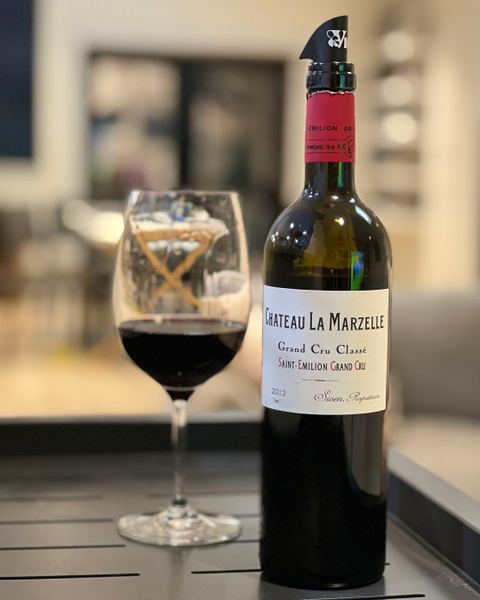
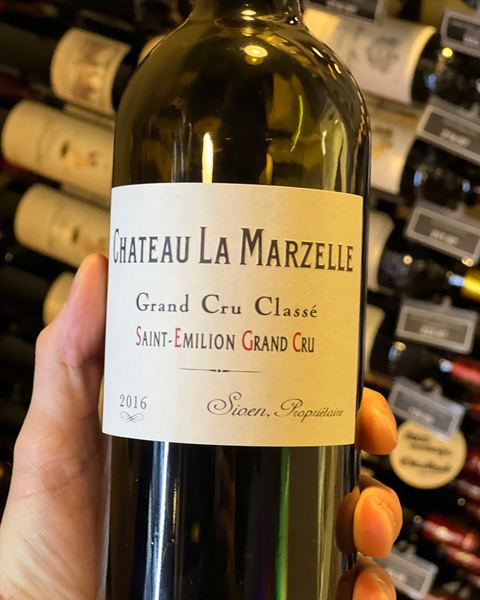
Château La Marzelle
How to read this
Capitals mark the stressed syllable. The French r comes from the back of the throat. The recording is the reference.
A Grand Cru Classé on the high terrace between
- Appellation
Saint-Émilion Grand Cru - Classification
- Grand Cru Classé (2022)
- On Instagram
- @chateaulamarzelle
- Châteaux
- See it among the 629
The château
La Marzelle has papers going back to 1741, when a notary recorded it in the hands of the Largeteau family, who kept it until 1891; the Belleyme map of 1821 shows it. The name once covered several holdings. Charles Cocks and Édouard Féret, whose Bordeaux et ses vins was the reference book of the Bordeaux trade, first printed it as a growth in 1886, at 15 tonneaux (the old Bordeaux measure of a crop, 900 liters, or 4 barrels), under Alph. Bonneval. By 1893 there were 4 La Marzelles, one of them a Clos La-Marzelle cut in 1885 from the upper part of the Longa property, on the plateau facing
Jacqueline and Jean-Jacques Sioen, from Belgium, bought the château with 13 hectares in 1998 and added 4 more in 2003. In 2020 the estate passed to their 3 daughters, Michèle, Pascale and Danielle Sioen, and Jean-Charles Joris, a grandson and the 3rd generation, has managed it since then. Between 2003 and 2022, 6 replantings took the density from 5,600 vines a hectare to 7,150, and in 2009 the label went back to its design of 1925.
The vineyard, 17 hectares on the Haute Terrasse, has 3 soils: sand to 70 centimeters over deep, heavy clay; brown gravelly soil from Tertiary deposits; and sand over a sandy clay subsoil. It is planted 75% Merlot, 17% Cabernet Franc and 8% Cabernet Sauvignon, and the first wine is blended around 70% Merlot, 20% Cabernet Franc and 10% Cabernet Sauvignon; the 2023 made 55,000 bottles. Château Prieuré La Marzelle is the second wine and
At a glance
- Appellation
Saint-Émilion Grand Cru - Commune
Saint-Émilion , on the Haute Terrasse toward Libourne- Classification
- Grand Cru Classé in the first classification, of 1955, and in 2022
- Owners
- The Sioen family, since 1998
- Direction
- Jean-Charles Joris, since 2020
- Vineyard
- 17 hectares; 7,150 vines a hectare after 6 replantings, 2003 to 2022
- Soil
- Sand over heavy clay; brown gravel; sand over sandy clay Terroir of
Saint-Émilion → - Grapes
- Merlot 75%, Cabernet Franc 17%, Cabernet Sauvignon 8%; the first wine around 70, 20 and 10
- Production
- 55,000 bottles in 2023
- Wines
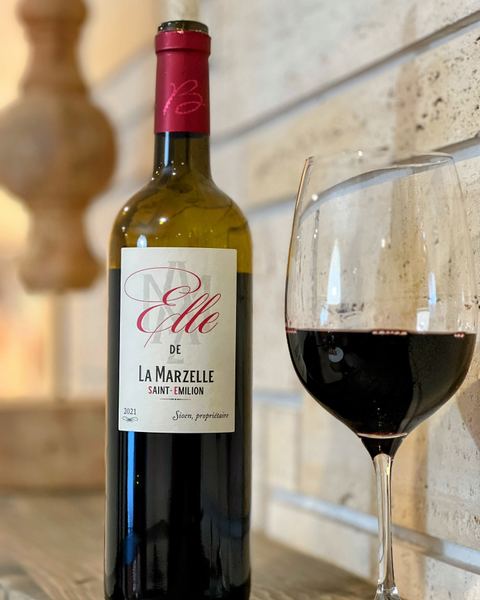
Château La Marzelle ; Château Prieuré La Marzelle;Elle de La Marzelle ; Le Rosé de La Marzelle- In history
- In the archives from 1741; 4 separate La Marzelles in 1893
Sources
- Institutions
- Association de Grands Crus Classés de
Saint-Émilion ,Château La Marzelle ; INAO, theSaint-Émilion classification of 2022 - Its own publications
Château La Marzelle : terroir, history, the owner, the 2023 vintage, the grand cru classé, Château Prieuré La Marzelle,Elle de La Marzelle , Le Rosé de La Marzelle
Revised November 4, 2026. How I choose sources
The record
The
Sources: Arrêté du 15 décembre 2022, JORF · INAO, the
Private
By invitation only.
Tastings
3
On from here
Test yourself on