Sauternes
How to read this
Capitals mark the stressed syllable. The French r comes from the back of the throat. The recording is the reference.
Sweet white only, from grapes picked over-ripe, by hand, in successive passes, at the lowest yield of any major Bordeaux appellation: 25 hectoliters a hectare, 15% of natural alcohol, 45 g/l of sugar left in the glass.
The place
The rules
Sémillon, Sauvignon, Sauvignon Gris and Muscadelle, at 6,500 vines a hectare and 25 hectoliters a hectare with a ceiling of 28. The grapes must carry 221 g/l of sugar, the wine must reach 15% of natural alcohol with at least 12% acquired, and at least 45 g/l of sugar must remain. The cahier des charges in force, the appellation’s official rulebook, was amended on March 25, 2026, which brought the end of raising forward to March 15 and the release to April 1 of the year after the harvest. The appellation dates from September 30, 1936,
The names
The list of 1855 ranks the sweet whites of
- Color
- Sweet white
- Communes
Barsac , Bommes, Fargues, Preignac,Sauternes - Vineyard
- About 2,200 hectares, some 190 estates, in 2010
- Grapes
- Sémillon, Sauvignon, Sauvignon Gris, Muscadelle
- Density
- 6,500 vines a hectare at least
- Yield
- 25 hectoliters a hectare, ceiling 28
- Alcohol
- 15% natural, 12% acquired at least; 45 g/l of sugar left
- Harvest
- By hand, over-ripe grapes, in successive passes
- Release
- From April 1 of the year after the harvest
- Classified
- 27 growths of 1855, Yquem above them all
- AOC since
- September 30, 1936
Sources: FGVB, cahier des charges
The stack
The same land in
It shares named communes with
The appellations of Bordeaux are stacked, not laid side by side. The map draws the whole stack. Open the map
The pyramid of names shows what each step promises: vines a hectare, bottles, ripeness, day of sale, grapes. Climb from here
Classifications that reach this appellation: The Classification of 1855 and The Michelin Guide selection.
Terroir
Drive south out of Preignac and the road climbs back through time. Near the Côte de Guilhem-de-Rey lies the youngest of its river terraces, yellowish sands with gravel and pebbles. Each spread beyond is older and higher, up to the oldest: clear quartz gravel in a yellowish, sometimes reddish clay, resting on limestone about 70 m above sea level. On the northern edge of the plateaus these high gravels come to the surface at Bommes,
In their study of the Sauternais soils, B. Pucheu-Planté and G. Seguin watched thick roots run about 5 m down the wall of a quarry cut into a former vineyard, on a knoll top of gravel and sand. Their probes showed the vines drawing water from that depth.
A later study by the same pair compared a dry autumn with a showery one. When small rains alternated with dry spells, Botrytis cinerea grew as noble rot; in the drought autumn the air stayed dry and the grapes shriveled instead. The soil's part, they wrote, was to keep water in check while the grapes ripened, so the berries did not burst. What this soil gives the grape is restraint.
- Slope wash and cover25.0%
- River and estuary deposits of today4.4%
- Ice age river terraces: sand, gravel, pebbles35.4%
- Shell sands (faluns), limestones and marls of the Miocene1.8%
- Starfish limestone and marine marls33.4%
Shares of the delimited area, measured on BRGM’s geological map, in families by the age and rock its legend prints, youngest first.
Half its delimited soil lies above 23 m, and 9 tenths lies between 10 and 75 m. 4.6% of it is steeper than 10%.
Measured section
The line runs 8.2 km, from 20 m to 2 m. Inside the delimited area it lies between 15 and 27 m.
Colors: Slope wash and coverRiver and estuary deposits of todayIce age river terraces: sand, gravel, pebblesStarfish limestone and marine marls
Tap the marker on the section, or open the borehole below: a core slides out, layer by layer.
1Drill here: Toulenne, borehole 852-2-11, 321 m from the line
| Depth | As printed | In English | Age (ICS) |
|---|---|---|---|
| 0.0 to 2.5 m | Quaternaire | Quaternary | the last 2.58 million years |
| 2.5 to 60.0 m | Oligocène | Oligocene | 33.9 to 23.04 million years ago |
| 60.0 to 152.2 m | Éocène | Eocene | 56.0 to 33.9 million years ago |
Log printed in BRGM notice 0852, p. 25, under the heading “Toulenne, Communal” (borehole BSS002AETB in the subsurface register). The log names ages, not rocks. Marked at the point of the line nearest to it.Depths in meters below the surface; thin layers are drawn at a minimum height.BRGM, Notice explicative de la feuille Langon à 1/50 000, 1978.
The units, as BRGM prints them
| Code | Name and age, as printed | Share |
|---|---|---|
| Slope wash and cover | 25.0% | |
| CFp | Formations superficielles | 25.0% |
| and 1 more unit under 1% each, 0.0% in all | ||
| River and estuary deposits of today | 4.4% | |
| Fy3-z | Alluvions subactuelles à actuelles indiféernéciées (sic), Pré-boréal à actuel | 4.4% |
| Ice age river terraces: sand, gravel, pebbles | 35.4% | |
| Fxb(a) | Basse terrasses - Terrasse de Bègle (type 6) indifférenciée, Saalien - "Riss" | 11.5% |
| Fwb(G) | Moyennes terrasses (RG Garonne) - Terrasses de Léognan, terrasse de Martillac et terrasse de St Selve indifférenciés (type 3 à 5), Esltérien - "Mindel" | 2.3% |
| Fvb(G) | Hautes terrasses (RG Garonne) - Terrasse de Martillac (type 2) indifférenciée et terrasse d'Arsac, Ménapien à Bavélien - "Gunz" | 7.5% |
| Fva(G) | Très hautes terrasses (RG Garonne) - Terrasse de Léognan (type 1) indifférenciée et terrasse de | 14.0% |
| Shell sands (faluns), limestones and marls of the Miocene | 1.8% | |
| m1-Ms | Faluns de Saucats à faciès marneux dominants, Aquitanien marin | 1.1% |
| and 2 more units under 1% each, 0.7% in all | ||
| Starfish limestone and marine marls | 33.4% | |
| g1-As | Calcaire à Astéries, Rupélien marin | 33.4% |
Informative figures, computed from INAO’s digitized parcel delimitation of October 12, 2026 and BRGM’s harmonized geological map (BD Charm-50); heights from IGN’s RGE ALTI 5 m. The plans held at the town hall are the legal reference. The delimited area is always somewhat larger than what is planted.
Sources: BRGM, Notice explicative de la feuille Langon à 1/50 000, 1978; B. Pucheu-Planté and G. Seguin, Les sols viticoles du Sauternais, Connaissance de la Vigne et du Vin 9(3), 1975; B. Pucheu-Planté and G. Seguin, Influence des facteurs naturels sur la maturation et la surmaturation du raisin dans le Sauternais, en 1978 et 1979, Connaissance de la Vigne et du Vin 15(3), 1981.
Its soil, layer by layer · See it in 3D · See it on the Map · Compare it with another appellation · All about Terroir
Châteaux on this site
Château Bastor-Lamontagne Château d’Arche Château d’Yquem Château de Fargues Château de Malle Château de Rayne Vigneau Château Filhot Château Gilette Château Guiraud Château Haut-Bergeron Château La Tour Blanche Château Lafaurie-Peyraguey Château Lamothe Château Lamothe-Guignard Château Liot Château Rabaud-Promis Château Raymond-Lafon Château Rieussec Château Romer Château Romer du Hayot Château Sigalas Rabaud Château Suduiraut Clos Haut-Peyraguey
Tastings
10

April 23, 2026 · 10
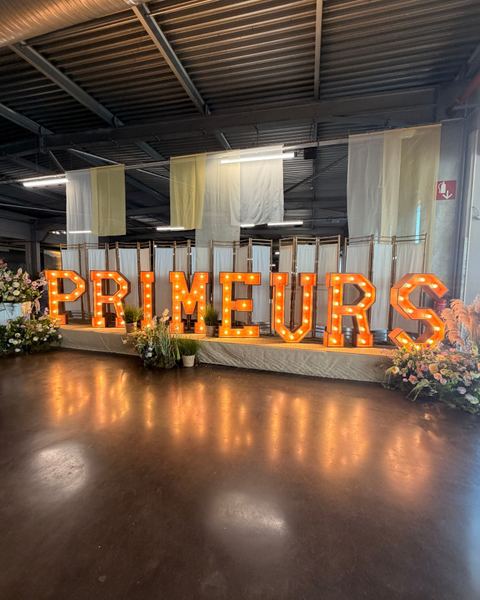
Bordeaux En Primeur 2025, Day 3
April 20, 2026 · 10
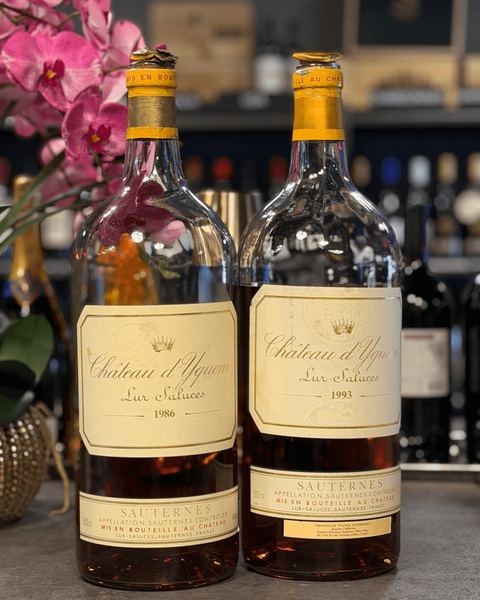
Bordeaux En Primeur 2025, Day 1
January 26, 2026 · 2
December 26, 2025
December 17, 2025
December 16, 2025
News from Sauternes
23
-
UGCB opens its account of Bordeaux 2026
The UGCB introduced the 2026 Bordeaux vintage on October 16, describing an early, intense vintage shaped by a hot, dry summer and visiting producers in
Sauternes , Saint-Emilion andMargaux .The early framing of 2026 will shape how growers, estates and the trade begin interpreting a vintage marked by exceptional heat.
-
Haut-Bergeron waits for botrytis in
Sauternes At
Château Haut-Bergeron in Preignac, the Lamothe family waited for Botrytis cinerea, which appeared around October 10 after a dry September, before hand-picking and sorting the grapes in hopes of producing a fine vintage.Sauternes depends on timing that cannot be forced. The report shows how the region’s vintage narrative can remain unresolved even as harvesting advances elsewhere in Bordeaux. -
Sauternes 2023 confirms its balance in bottleSauternes andBarsac ’s 2023 classified growths are now bottled, showing richness, freshness, botrytis expression and immediate appeal, with acidity higher than in 2022.Sauternes needs vintages that combine classical concentration with freshness and accessibility. The first post-bottling view suggests 2023 could support a more contemporary, less ceremonious case for drinking sweet Bordeaux. -
2024 Confidence de Bastor-Lamontagne reviewed
Falstaff reviewed 2024 Confidence de Bastor-Lamontagne, a wine associated with
Château Bastor-Lamontagne in theSauternes area.The profile adds another data point for a difficult and closely scrutinized 2024 vintage. It also keeps attention on the wider range of wines emerging from the
Sauternes sector, beyond the region's headline classified sweet wines. -
Cycling trip in France: Tour de France through the vineyards of Bordeaux
A cycling trip through Bordeaux’s vineyards starts in Bordeaux and runs through areas including
Entre-deux-Mers ,Médoc andSaint-Émilion . In Bommes, 40-year-old winemaker Alexis Charrier producesSauternes with his family property. -
A first in France: this ride-hailing service launches an offer to try to save the Bordeaux vineyard
According to Actu.fr, Bolt launched its first such offer in France, Bolt Vignobles, in Gironde on July 1, 2026. Options serve 3 or 6 people from Bordeaux or Bordeaux-Mérignac airport to
Médoc sudMargaux ,Sauternes orSaint-Émilion . -
Could cocktails save
Sauternes ?Sauternes vineyard prices fell by more than 90% from 1991 to 2023, according to Agreste/SAFER data.Château d’Arche is promoting its sweet wines in cocktails, including through a masterclass and cocktail week at Nektar in Bordeaux last October. -
Sauternes 2025 reinforces a historic run of great vintages in BordeauxThe 2025
Sauternes andBarsac vintage in Bordeaux is being described as one of the most consistent in recent years, with good yields and strong botrytis development for the fourth consecutive year, according to Revista ADEGA. -
Bordeaux 2025: Ideal conditions lead to luscious
Sauternes According to Decanter, a near-perfect cycle of morning mists, sunshine and rainfall produced a small but beautiful 2025
Sauternes crop, with an average yield of 12.5hl/ha.Sauternes andBarsac produced pure, luscious sweet wines with vibrant freshness. -
According to jancisrobinson.com, tiny yields produced powerful Bordeaux 2025 white wines, with especially promising sweet wines from
Sauternes andBarsac . -
What Were People Drinking in 1855?
In 1855, Napoleon III requested a Bordeaux wine classification for the Paris Universal Exposition. The hierarchy covered red wines from the
Médoc ,Château Haut-Brion in theGraves , and sweet white wines fromSauternes andBarsac , with harvests beginning on October 7. -
Le Duc de
Sauternes : a collective effort in service of the appellationLe Duc de
Sauternes is a collective cuvée created in the 1970s by 9 growers to promoteSauternes . It works alongside the ODG as a teaching and commercial gateway to the appellation. -
Château de Malle : the art of bringing a classified growth to life in a historic monumentIn April 2024, Clémence and Luc Planty acquired
Château de Malle , a Second Growth classified in 1855 inSauternes . They are preserving its historic monument and classified gardens while opening the estate to the public and developing wine tourism. -
Why Irish whiskey loves sweet and fortified wine casks
Decanter says barrels that held Marsala, Madeira and
Sauternes have a special affinity with triple-distilled Irish whiskeys, and lists 6 bottles to try. The feature was published on March 13, 2026. -
The sweet spot:
Sauternes at auctionAccording to iDealwine, auction prices for most
Sauternes remain accessible relative to quality, whileChâteau d’Yquem remains in a category of its own. -
La Tour Blanche students shake up wine’s rulebook
Students from the La Tour Blanche wine school presented innovative projects during a viticulture hackathon aimed at energizing the wine sector, from artistic initiatives to new youth-oriented drinks. The results were announced at
Château d’Yquem , highlighting Bordeaux/Sauternes education and entrepreneurship. -
Carpe Wine: The 1855 Classification
An explainer column demystifying wine laws and classifications, focusing on Bordeaux’s 1855 Classification and its historical role in ranking top
Médoc andSauternes estates. -
Brooklyn Beckham and Nicola Peltz dine with a 1811
Château d’Yquem On Jan 28, Brooklyn Beckham and Nicola Peltz shared dinner photos showing an 1811
Château d’Yquem , aSauternes wine said to be worth about £75,000 per bottle. Only 10 bottles of the vintage are thought to exist worldwide. -
Bordeaux’s classified growths will open Wine Paris
The Conseil des Grands Crus Classés en 1855 will host a first-of-its-kind tasting ahead of Wine Paris 2026, bringing together 54
Médoc andSauternes estates at the Musée des Arts Décoratifs. The trade-only event aims to highlight the diversity and collective momentum of the 1855 classified châteaux and become an annual fixture. -
Uncover hidden gems: Affordable Bordeaux and Burgundy wines
Decanter rounds up 14 best-value wines under £30 from Bordeaux and Burgundy. The selection spans multiple styles and includes Bordeaux regions such as St-Julien, St-Estèphe and
Sauternes , plus some supermarket own-label options. -
Sigalas-Rabaud becomes first
Sauternes Premier Grand Cru Classé to release a dealcoholized wineChâteau Sigalas-Rabaud has become the first
Sauternes Premier Grand Cru Classé to release a dealcoholized wine. The move signals growing interest in no/low-alcohol products even among classified Bordeaux sweet-wine estates. -
The Union des Grands Crus de Bordeaux published its 2025 Harvest Notebook on October 13, 2025, covering the harvest from
Saint-Julien toPessac-Léognan ,Saint-Émilion andSauternes and describing the vintage as elegant and atypical. -
Uncover hidden gems: Affordable Bordeaux and Burgundy wines for your Christmas feast
Decanter selected 14 Bordeaux and Burgundy wines for Christmas feasts, including sparkling, white, red and sweet styles from areas such as St-Julien, St-Estèphe, Beaujolais, Chablis and
Sauternes .