Château
Château La Mission Haut-Brion
How to read this
Capitals mark the stressed syllable. “ohn” is a nasal vowel: say it through the nose, with no n. The French r comes from the back of the throat. The recording is the reference.
Across the road from Haut-Brion and on the same gravel, the vineyard Lazarist priests planted from 1682: a Cru Classé de
- Appellation
Pessac-Léognan - On Instagram
- @chateaulamissionhautbrion
- Châteaux
- See it among the 629
The château
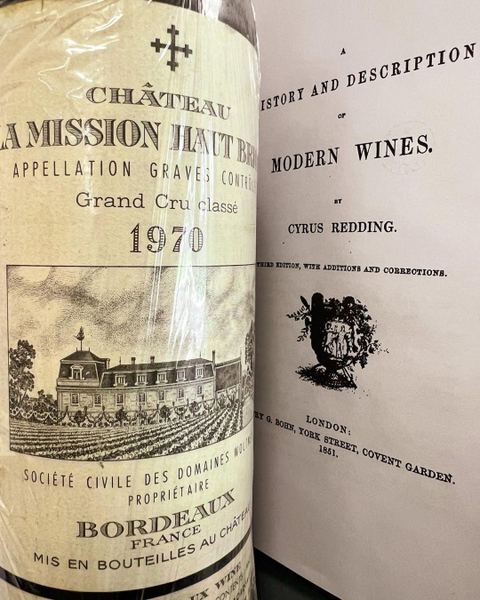
The Lazarist priests took over the vineyard of La Mission in 1682, turned the remaining scrub into vines and in 1698 built the chapel of Notre-Dame d’Aubrion, which gives the second wine its name. The wine had a rank long before any official list. William Franck, whose Traité sur les vins du
Frédéric Otto Woltner, a Bordeaux négociant (a merchant who buys from the châteaux and sells on), bought the estate in 1919 and, from 1926, with his 2 sons, brought it into the modern era, with enameled steel vats and, from the 1927 vintage, a white. The Dillon family’s offer was accepted in 1983 and the sale took place on November 2.
The vineyard covers 29 hectares across the road from Haut-Brion: close to 25 of red, Merlot, Cabernet Sauvignon and Cabernet Franc, and a little over 4 of white, Sémillon and Sauvignon, on gravel 20 centimeters to more than 3 meters deep over clay, sand, limestone and shell limestone. In 2024 the whole vineyard was mapped by soil conductivity. La Chapelle de La Mission Haut-Brion is the second wine, made in small quantities. The white, long sold as Château Laville Haut-Brion, took back from the 2009 vintage the name Woltner had chosen,
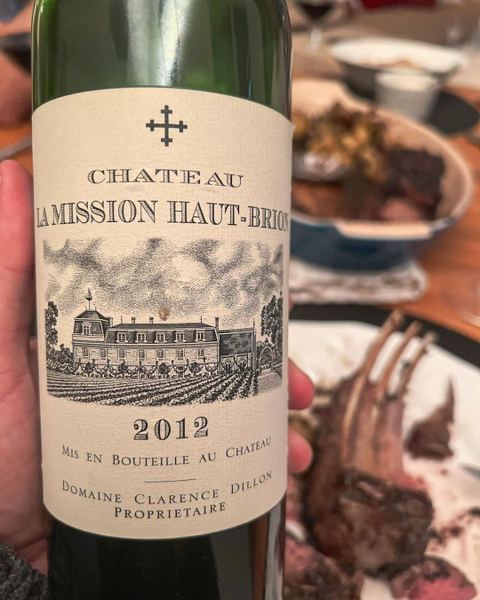
The style of La Mission is darker, smokier and more brooding than that of its neighbor, and it lasts. The 2012, which I tasted in November 2025, was all graphite, dark cherry and the smoke of
At a glance
- Appellation
Pessac-Léognan - Classification
- Cru Classé de
Graves , 1953 and 1959;La Tour Haut-Brion and Laville Haut-Brion merged into it in 2014; Michelin Guide, 2 grapes (2026) - Owners
- Domaine Clarence Dillon, the Dillon family, since November 2, 1983
- Vineyard
- 29 hectares: close to 25 of red, a little over 4 of white
- Soil
- Gravel 20 centimeters to more than 3 meters deep over clay, sand, limestone and shell limestone Terroir of
Pessac-Léognan → - Grapes
- Red: Merlot, Cabernet Sauvignon, Cabernet Franc; white: Sémillon, Sauvignon
- Wines
Château La Mission Haut-Brion (red and white); La Chapelle de La Mission Haut-Brion; La Clarté de Haut-Brion (white, with Haut-Brion)- In history
- Planted by the Lazarists from 1682; a second growth of Pessac under Haut-Brion in the prices of 1745
- Took in
Château La Tour Haut-Brion
Sources
- Institutions
- Conseil Interprofessionnel du Vin de Bordeaux, the
Graves classification - Its own publications
- Domaine Clarence Dillon, the sale of
Château La Mission Haut-Brion wines from the cellars, October 30, 2024;Château La Mission Haut-Brion : terroir, histoire, nos vins
Revised October 13, 2026. How I choose sources
The record
The classification of the
In the Michelin Guide’s first Bordeaux selection, announced on September 8, 2026, it took 2 grapes of a possible 3, one of 16 estates at that mark.
Sources: Syndicat Viticole de
Private
By invitation only.
Also appears in
Tastings
2
Houses in its story
On from here
Test yourself on